
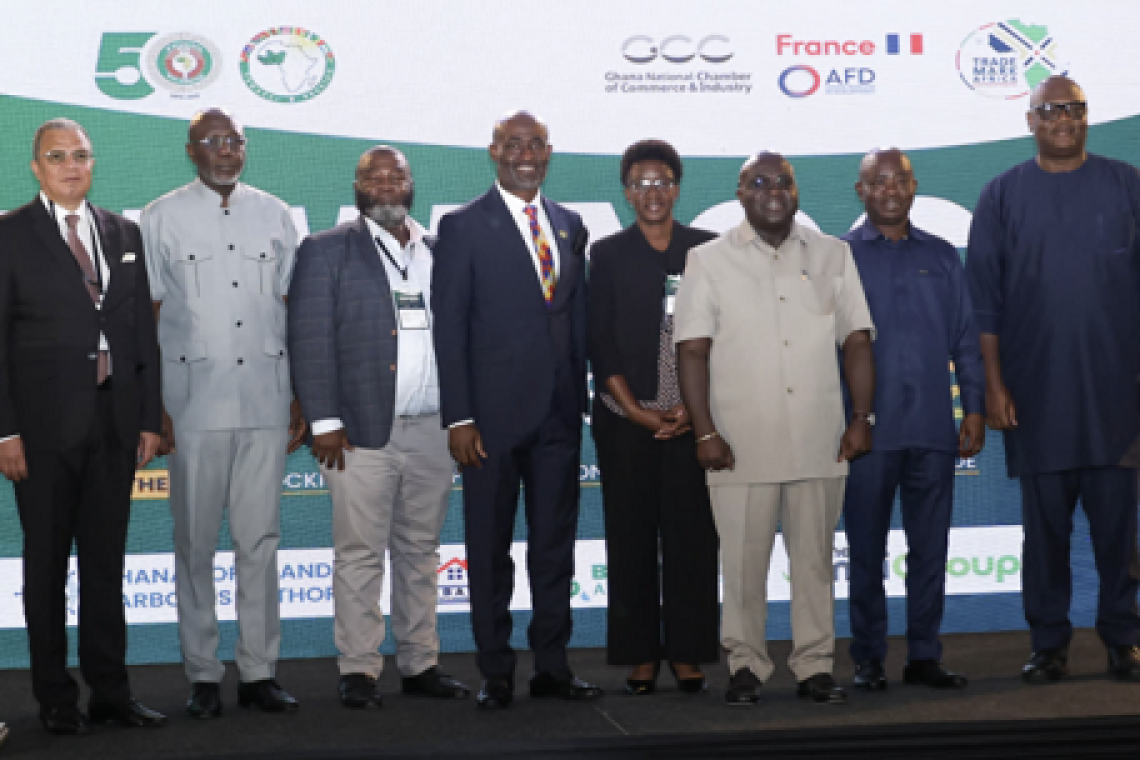
At the high-level Federation of West African Chambers of Commerce and Industry (FEWACCI) Summit, Ghana’s Chief of Staff, Mr. Julius Debrah, delivered a strategic mandate for the sub-region: the era of fragmented trade must end. Speaking on the theme "Unlocking West Africa’s Economic Potential," Mr. Debrah positioned the African Continental Free
Trade Area (AfCFTA) as the primary engine for transforming Africa into a competitive global economic bloc.
The summit, organized by the Ghana National Chamber of Commerce and Industry (GNCCI), brought together captains of industry to address the persistent challenge of low intra-continental trade and high logistics costs.
1. Harmonizing the Productive "Engine"
Mr. Debrah highlighted that Ghana's domestic policies—specifically the 24-hour economy programme and the Export Expansion Programme—are intentionally designed to align with AfCFTA. The goal is to ensure Ghanaian SMEs are not just participants, but leaders in regional value chains.
| Initiative | Strategic Objective | Technical/Economic Impact |
| 24-Hour Economy | Maximize industrial output and resource utility. | Increased competitiveness and round-the-clock logistics. |
| Export Expansion | Support SMEs in navigating ECOWAS/AfCFTA rules. | Direct boost to intra-regional export volumes. |
| One-Stop-Shop System | Streamline regulatory compliance for businesses. | Reduction in "Red Tape" and business registration time. |
| Economic Transformation Project | Financial and technical support for thousands of SMEs. | Resilience against external economic shocks. |
2. Solving the "Logistics Logjam"
Despite the optimism, the Chief of Staff was candid about the structural "friction" that hinders trade within West Africa. He called for a coordinated Public-Private Partnership (PPP) to dismantle these barriers.
The Four Pillars of Trade Facilitation:
-
Infrastructure: Overcoming inadequate road, rail, and port logistics.
-
Standards: Harmonizing fragmented regulatory standards to allow goods to move freely.
-
Finance: Increasing access to credit for SMEs seeking to scale across borders.
-
Costs: Drastically reducing the high cost of cross-border transactions and transport.
3. Youth & Innovation: The "Future-Proof" Strategy
A significant portion of the summit focused on the Apprenticeship-to-Entrepreneur Programme, implemented alongside the Ghana Enterprise Agency. Mr. Debrah emphasized that "youth development" is not a social intervention, but an economic necessity.
Key Youth Empowerment Mechanisms:
-
Youth Innovation Challenge: Driving tech-based solutions for regional trade problems.
-
Structured Mentorship: Connecting young entrepreneurs with established FEWACCI members.
-
Value Chain Inclusion: Ensuring young-led startups are integrated into the "Productive Capacity" of the sub-region.
4. The Role of Chambers: From Advocacy to Action
Mr. Debrah urged bodies like the Association of Ghana Industries (AGI) and the GNCCI to move beyond traditional advocacy. He challenged them to become active engines for investment mobilization and private-sector-led regional development.
The Bottom Line
The 2026 FEWACCI Summit represents a "Sovereignty Reset." By moving toward harmonized standards and a 24-hour industrial cycle, West Africa is attempting to shift from being a collection of disparate markets to a singular, formidable economic power. As Mr. Debrah reaffirmed, the government remains committed to building a "dynamic and prosperous" West African economy that works for its youth and its entrepreneurs.