
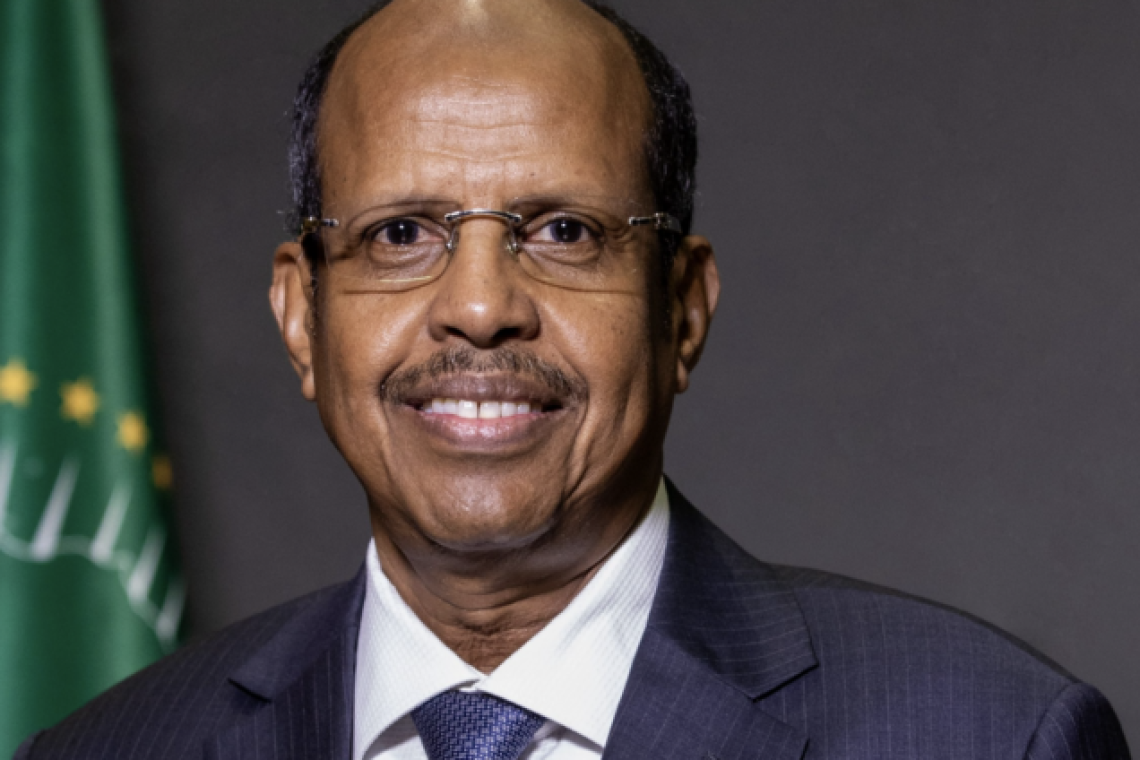
In a move described as a "historic milestone for global healing," the Chairperson of the African Union (AU) Commission, Mr. Mahmoud Ali Youssouf, has formally welcomed the United Nations General Assembly's adoption of Resolution A/80/L.48.
The resolution, spearheaded by Ghana, marks a definitive international shift in acknowledging the trafficking of enslaved Africans and racialized chattel enslavement as the "gravest crime against humanity." In a statement shared with the Ghana News Agency, Chairperson Youssouf commended President John Dramani Mahama for his "principled leadership" in centering Africa’s demand for historical truth on the world stage.
1. Decoding Resolution A/80/L.48
The adoption of this resolution is seen as the culmination of decades of advocacy by the African Union and the CARICOM nations. It moves beyond symbolic apology toward a structured international framework for accountability.
| Component | Significance |
| Legal Classification | Formally labels chattel slavery as a "Crime Against Humanity." |
| Enduring Consequences | Recognizes the link between historical slavery and modern systemic racism. |
| Reparative Justice | Establishes a basis for discussions on economic and social reparations. |
| Agenda 2063 Alignment | Syncs with the AU's goal for a "United, Resilient, and Influential Africa." |
2. A Victory for "Reparative Justice"
Chairperson Youssouf emphasized that the AU’s support for the resolution is anchored in Agenda 2063, Africa’s blueprint for transforming the continent. The "Justice Reset" is not merely about the past; it is about addressing contemporary economic disparities born from centuries of exploitation.
-
Comprehensive Acknowledgment: The AU is calling for a global curriculum and memorialization effort to ensure the history of the slave trade is never sanitized.
-
Economic Redress: The resolution reinforces the "urgent need" to address the legacy of slavery through debt relief, developmental investment, and the return of stolen cultural artifacts.
-
The "Ghana Model": By leading this UN resolution, Ghana has positioned itself as the diplomatic "Gateway to Africa" for issues concerning the Global African Diaspora.
3. The AU-UN Partnership for 2026
The AU Commission has pledged to work closely with the United Nations and various Member States to ensure the resolution leads to actionable policy. This includes:
-
Truth & Healing Commissions: Supporting member states in establishing national dialogues on the impact of enslavement.
-
Global Advocacy: Using the resolution to influence international law and human rights protocols.
-
Educational Reform: Ensuring that the "grave crime against humanity" classification is reflected in international textbooks and archives.
4. Context: Ghana’s Diplomatic Momentum in 2026
The passing of Resolution A/80/L.48 adds to a string of significant milestones for Ghana in early 2026. From the "Legal Education Reform" to the "Industrial Reset" at GEXIM, the country is increasingly asserting its influence across legal, economic, and human rights domains.
The Bottom Line
The AU’s endorsement of the Ghana-led UN resolution is a "Moral Reset" for the international community. As Chairperson Mahmoud Ali Youssouf noted, this decision is an essential step toward ensuring that such crimes are "neither forgotten nor repeated." For President Mahama and the people of Ghana, it represents a successful translation of African principles into global law.