
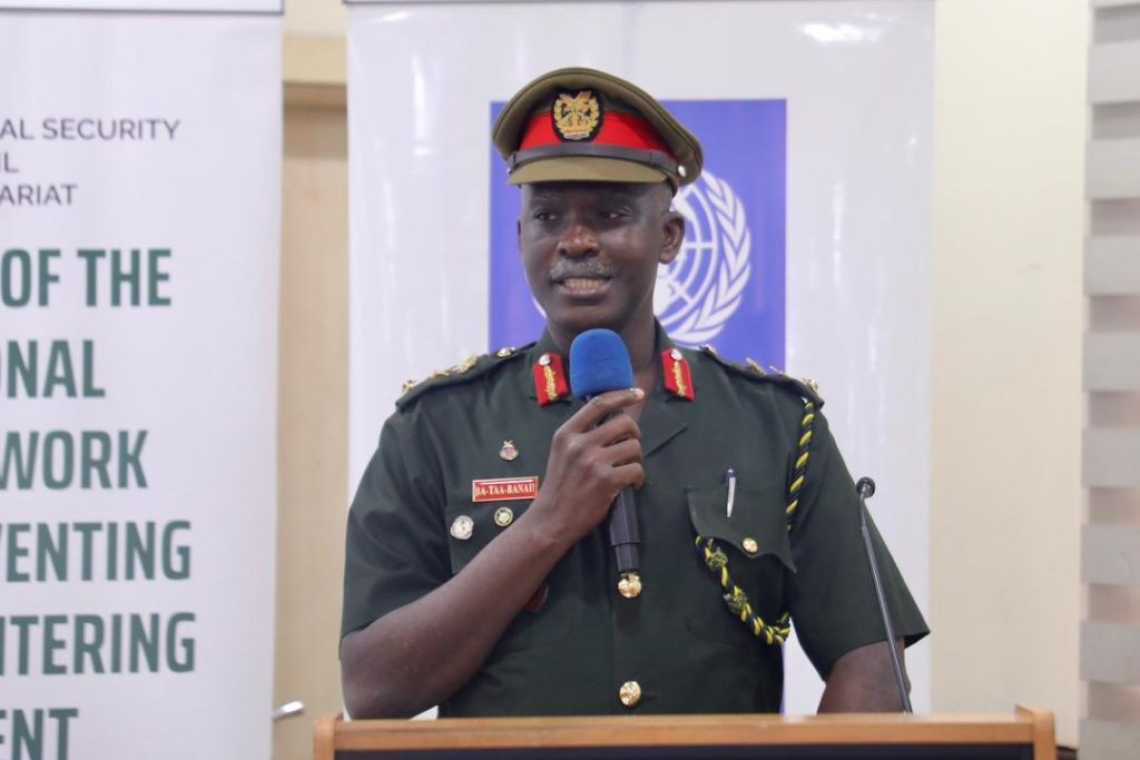
Despite maintaining a "zero-attack" record on home soil, Ghana is significantly ramping up its defensive posture. Brigadier General Timothy Ba-Taa-Banah, Director of the National Counter Terrorism Fusion Centre (NCTFC), has warned that the country’s current safety is a product of "deliberate strategies," not immunity.
Speaking at a three-day stakeholder engagement in Accra—supported by the United Nations Development Programme (UNDP)—Brig. Gen. Ba-Taa-Banah called for a comprehensive review of the 2019 National Framework to address emerging 2026 threats, including AI-driven disinformation and sophisticated terror financing.
1. The Sahel Shadow: Why Ghana is Not Immune
The urgency of the review is driven by the deteriorating security landscape in the neighboring Sahel region. According to Ms. Shaima Hussein, UNDP Deputy Resident Representative, the shift in regional security can be rapid and devastating.
The Regional Security Reality (2025/2026 Data): | Metric | Statistic / Fact | Significance for Ghana | | :--- | :--- | :--- | | Global Terrorism Deaths | 51% occur in the Sahel region. | Proximity increases the risk of "spillover." | | Burkina Faso Trend | 0 deaths in 2014; #1 on Global Index in 2024. | Demonstrates how fast security can collapse. | | Economic Link | 2023 UNDP "Journey to Extremism" Report. | Poverty and unemployment are the primary drivers. | | National Impact | No loss of lives from Paga to Aflao. | Indirect economic strain remains a major factor. |
2. Technical Evolution: Tackling AI and Online Radicalization
The 2026 framework review is specifically designed to identify gaps in the original 2019 document. Security officials are now prioritizing technology-led threats that bypass physical borders.
New Priority Areas for the NCTFC:
-
AI-Driven Disinformation: Countering automated "bot" accounts used to spread extremist propaganda.
-
Online Radicalization: Monitoring hate speech and recruitment efforts on encrypted messaging platforms.
-
Sophisticated Financing: Tracking the use of digital assets and informal value transfer systems by terror cells.
-
Inclusive Resilience: Engaging youth, women, and religious bodies in 11 of the 16 administrative regions to build "community immunity."
3. The Economic-Security Nexus
Brig. Gen. Ba-Taa-Banah made a strong case for the link between the national economy and defense resilience. He argued that even without a direct physical attack, a country's fortunes are negatively impacted by regional instability, which deters investment and increases the cost of border security.
Stakeholders in the Review Process:
-
Security Agencies: Developing response mechanisms for border incursions.
-
Civil Society & Religious Bodies: Leading the "moral and social" counter-narrative.
-
Youth Groups: Identifying early signs of radicalization in vulnerable communities.
-
UNDP: Providing technical expertise and capacity building.
4. A Decade of Stark Reminders
The forum served as a somber reminder of the 1990s attacks in Kenya and Tanzania. The NCTFC emphasized that while Ghana has remained largely unaffected for decades, "democratic stability should not be taken for granted." The goal of the 2026 review is to move from a Reactive to a Proactive national security stance.
The Bottom Line
The Accra stakeholder engagement is a "Security Architecture Reset." By incorporating the threats of the AI era and the socio-economic realities of the Sahel, Ghana is attempting to fortify its borders before a single casualty is recorded. As Brig. Gen. Ba-Taa-Banah concluded, vigilance is the only vaccine against complacency.