
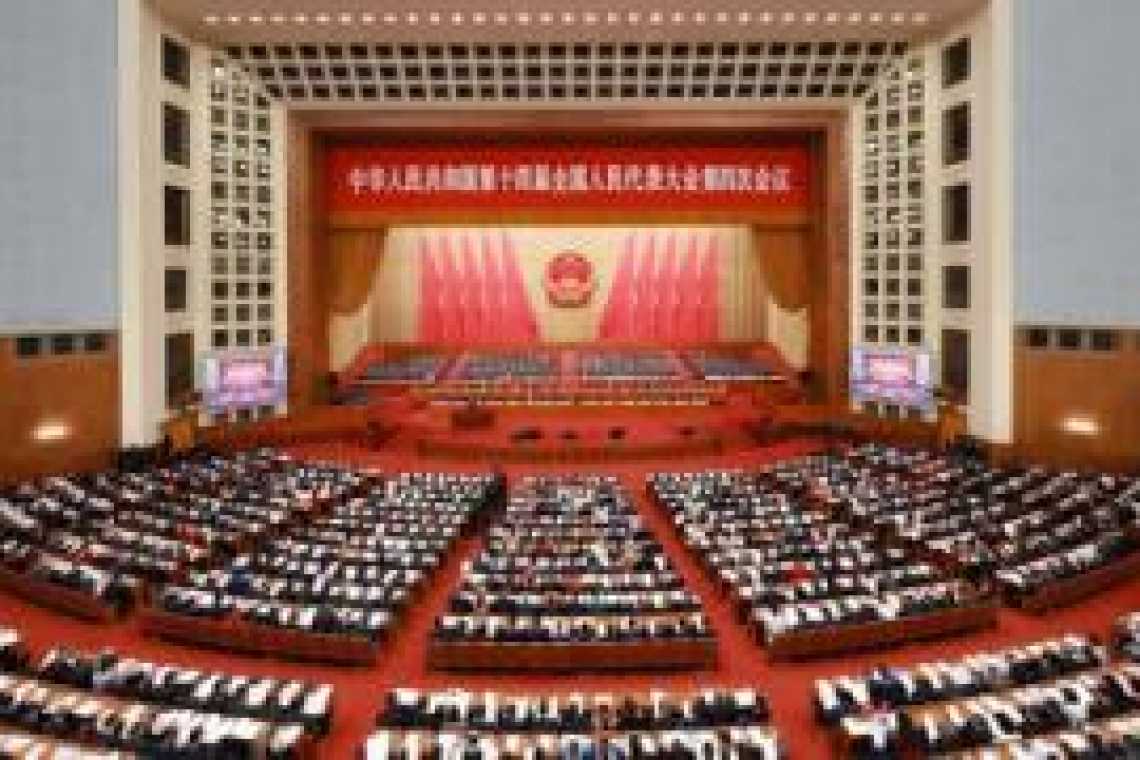
The Standing Committee of the National People’s Congress (NPC) has released its 2026 work report, detailing a "High-Quality Legislative Year" that fundamentally reshapes
China's economic and technological landscape. From codifying the rights of private businesses to setting the world's first comprehensive guardrails for Embodied AI, the top legislature has moved to turn policy promises into binding national law.
As the 15th Five-Year Plan (2026–2030) begins, these legislative "pillars" are designed to stabilize the domestic market while aligning China with high-standard international trade rules.
1. Economic Pillar: The Private Sector Promotion Law
For the first time in China’s history, the rights of private enterprises have been elevated to a foundational status, equivalent to state-owned enterprises.
-
Key Principles: Enacted on April 30, 2025 (effective May 20, 2025), the law codifies "impartial treatment, fair competition, and equal protection."
-
The "Two Unwaverings": It legally cements the state's commitment to both the public and private sectors.
-
Ban on "Illegal Fees": Explicitly prohibits administrative agencies from imposing fines without legal basis or apportioning financial burdens to private firms—a direct response to the "Illegal Miners" of capital.
2. Tech Pillar: AI and Cybersecurity 2025 Revisions
Following the surge in generative AI user numbers (reaching 515 million by mid-2025), the NPC revised the Cybersecurity Law to create a "Digital Shield" for the nation.
The "AI+Energy" Integration:
-
Safeguards: New provisions added on October 28, 2025, promote AI security and ethical norms.
-
Infrastructure: The law now mandates state support for the construction of AI training data resources and computing power hubs.
-
Heavy Penalties: Fines for severe data breaches or illegal equipment sales have been increased to RMB 2 million ($280,000) or more, with potential license revocation.
3. Market Integrity: The "Anti-Involution" Law
The NPC’s revision of the Anti-Unfair Competition Law (AUCL), effective October 15, 2025, targets the "hidden" dangers of the digital economy.
| Feature | New Regulatory Action |
| Data Scraping | Explicitly classified as unfair competition for the first time. |
| Algorithm Abuse | Bans the use of technical means to "maliciously redirect" or interfere with competitors. |
| Platform Fairness | Prohibits platforms from forcing merchants to sell below cost (the "anti-involution" clause). |
| Brand Protection | Bans using competitor trademarks as "hidden" keywords in search advertising. |
4. Public Security: Atomic Energy and Health Response
To support the "peaceful and high-quality" utilization of advanced science, two major foundational laws were enacted:
-
Atomic Energy Law: Effective January 15, 2026. It establishes a national accounting and control system for nuclear materials and sets strict penalties (up to RMB 5 million) for security failures or cyberattacks on nuclear facilities.
-
Public Health Emergency Response Law: Effective November 1, 2025. It establishes a "Tiered Response Mechanism" and mandates that medical institutions report potential outbreaks through an online direct-reporting system within 2 hours.
The Bottom Line
The 2026 NPC Work Report signals that China’s era of "growth at any cost" has been replaced by "Rule of Law Modernization." By providing legal scaffolding for everything from private equity to quantum computing, the NPC is attempting to build an environment where innovation can thrive without generating systemic risk.