
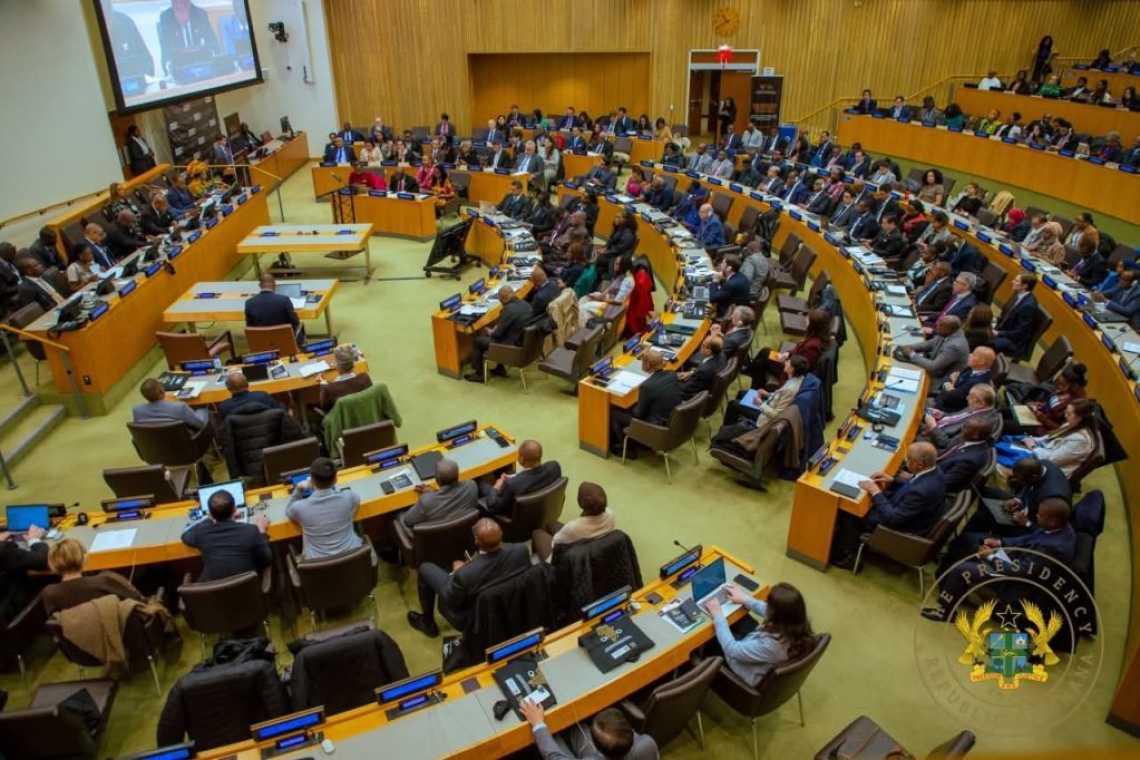
In a historic session at the United Nations Headquarters in New York, President John Dramani Mahama has intensified his call for a global "Moral Reset," formally signaling Ghana’s intention to table a landmark proposal for reparatory justice.
Speaking at a High-Level Event on the trafficking and racialized chattel enslavement of Africans, the President moved to transition the global conversation from abstract history to a structured, legal, and financial framework for healing.
1. The Human Cost: 18 Million Lives
President Mahama grounded his plea in the staggering data of the Transatlantic Slave Trade, emphasizing that the "chattel" system was a unique, permanent, and racialized form of dehumanization that fueled the global economy for four centuries.
The Middle Passage Statistics:
-
Human Trafficking: An estimated 18 million Africans were forcibly removed from the continent.
-
Mortality Rate: Between 10% and 15% of those captured perished during the "Middle Passage" across the Atlantic due to inhumane conditions, disease, or resistance.
-
Economic Drivers: The forced labor of these individuals became the backbone for global commodities, including sugar, cotton, tobacco, and cocoa.
2. Linguistic Clarity: Reclaiming Humanity
A central theme of the President’s address was the importance of language in the pursuit of justice. He challenged the historical terminology used to describe the victims of the trade.
“There is no such thing as a slave. There were human beings who were trafficked and then enslaved by people who believed they could own those human beings as chattel.” — President John Dramani Mahama
The "Chattel" Distinction: Unlike earlier historical forms of servitude, the transatlantic system was:
-
Racialized: Built on a false hierarchy of race.
-
Permanent: Hereditary, ensuring that children were born into property status.
-
Commoditized: Humans were branded, renamed, and sold as physical assets in markets and plantations.
3. The UN Resolution: A Legal Pathway
The cornerstone of Ghana’s proposal is a United Nations resolution that would formally declare the trafficking and enslavement of Africans as the gravest crime against humanity.
The Resolution’s Objectives: | Objective | Intended Outcome | | :--- | :--- | | Global Acknowledgement | Unified recognition of the suffering of 18 million people. | | Reparatory Framework | Establishing a formal pathway for financial and developmental justice. | | Safeguard Against Forgetting | Ensuring the erasure of African culture and identity is addressed in global education. | | Healing | Collective psychological and social restoration for the African Diaspora. |
4. Addressing the "False Hierarchy"
President Mahama dismissed the argument that the widespread nature of slavery in the 15th–19th centuries justified its existence. He emphasized that the system was built on a "false racial hierarchy" devoid of scientific or moral justification. He urged the international community to draw inspiration from the Abolitionists who resisted the system when it was at its most profitable.
The Bottom Line
President Mahama’s UN address represents a "Justice Reset." By moving the reparations debate into the halls of the United Nations, Ghana is leading a diplomatic charge to ensure that the "scars on African societies" are not just remembered, but actively healed. As the President concluded, confronting this legacy requires more than words—it requires deliberate global action anchored on truth.