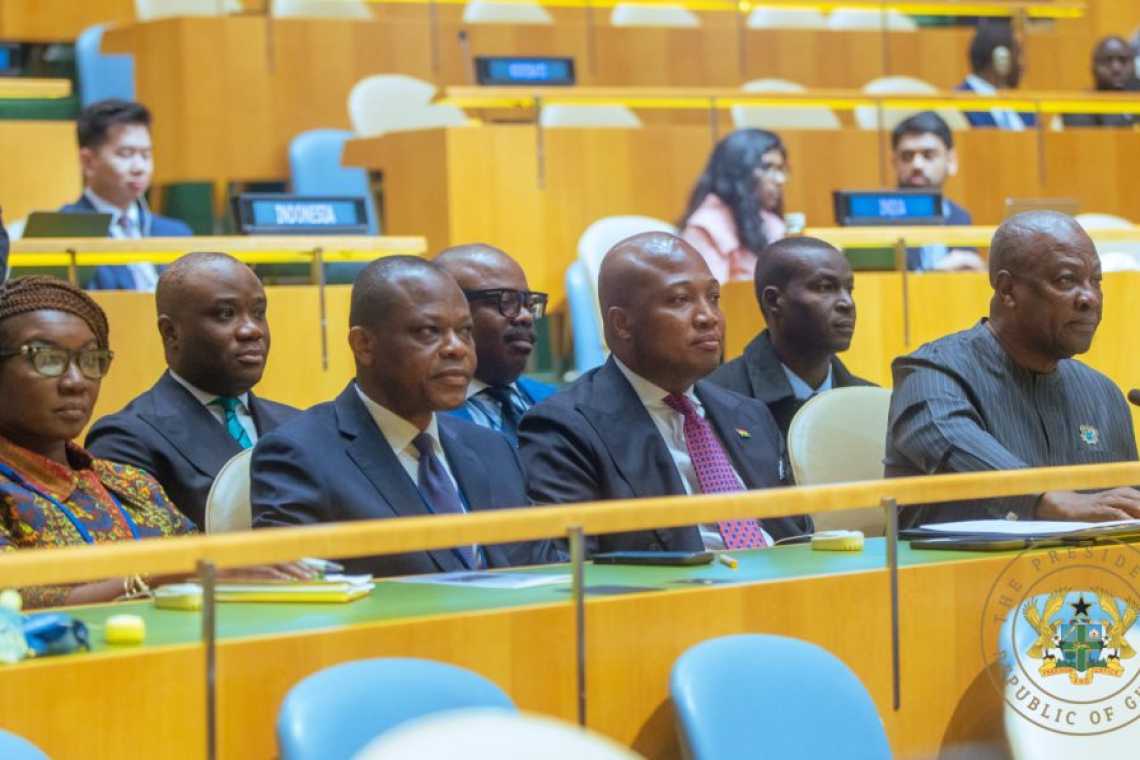
In a watershed moment for global diplomacy and human rights, the United Nations General Assembly (UNGA) has officially adopted a resolution recognizing the transatlantic slave trade as the "gravest crime against humanity." The resolution, which was personally tabled and championed by President John Dramani Mahama in his dual role as the African
Union (AU) Champion for Reparations, passed with a significant majority. This move marks a definitive shift in the global legal and moral framework regarding reparatory justice for the 18 million Africans forcibly trafficked over four centuries.
1. The Vote: A Divided Global Conscience
The adoption of the resolution followed months of intense consultations led by Ghana with scholars, jurists, and continental bodies. While the victory was decisive, the voting pattern revealed deep-seated geopolitical divisions on the issue of reparations.
The UNGA Scorecard:
-
In Favor (123 Countries): A broad coalition from the Global South, including the African Union, Caribbean nations, and parts of Asia and South America.
-
Against (3 Countries): The United States, Israel, and Argentina voted against the measure.
-
Abstentions (52 Countries): Notably included Britain and European Union member states, reflecting a cautious "neutrality" from former colonial powers.
"With a great moral issue involved, neutrality does not serve righteousness. For to be neutral between right and wrong is to serve wrong." — President Mahama (quoting Theodore Roosevelt)
2. The Impact of a "Non-Binding" Victory
While UN General Assembly resolutions are not legally binding in the same way as Security Council mandates, they carry immense moral and political authority. In the tech and policy world, this acts as a "Normative Reset."
How the Resolution Shapes the Future: | Domain | Impact | | :--- | :--- | | Global Norms | Establishes a standard definition of the slave trade as a "crime against humanity." | | National Policy | Provides a framework for individual nations to develop domestic reparation laws. | | Education | Encourages a global curriculum reset to address "historical amnesia" regarding the Middle Passage. | | International Law | Serves as a foundational document for future legal claims and reparative actions. |
3. The Economic & Social "Scars"
President Mahama emphasized that the resolution is a necessary response to the structural inequalities that continue to shape Africa's development. The transatlantic trade did not just steal people; it disrupted entire systems.
-
Depopulation: Millions were lost to raids, forced marches, and the Middle Passage (where mortality reached 15%).
-
Systemic Weakening: Indigenous African economies were hollowed out to serve the production of global commodities like cotton, sugar, and cocoa.
-
Structural Inequality: The resolution acknowledges that the current development trajectory of Africa is still hindered by the "enduring scars" of this four-century disruption.
4. A Pathway to Healing
The President concluded his address by invoking the words of Dr. Martin Luther King Jr., noting that while the "arc of the moral universe is long," today it has "bent toward justice." The resolution is seen as a safeguard against forgetting, ensuring that the dignity of the millions who suffered is restored in the eyes of the international community.
The Bottom Line
The adoption of this resolution is a "Diplomatic Reset" for the African continent. Led by President Mahama, the move forces the global community to stop viewing the slave trade as a "unfortunate historical event" and start treating it as a legal and moral crime that requires active reparative action. For the 123 countries that voted "Yes," the message was clear: history has beckoned, and they have chosen to stand on the right side of it.