
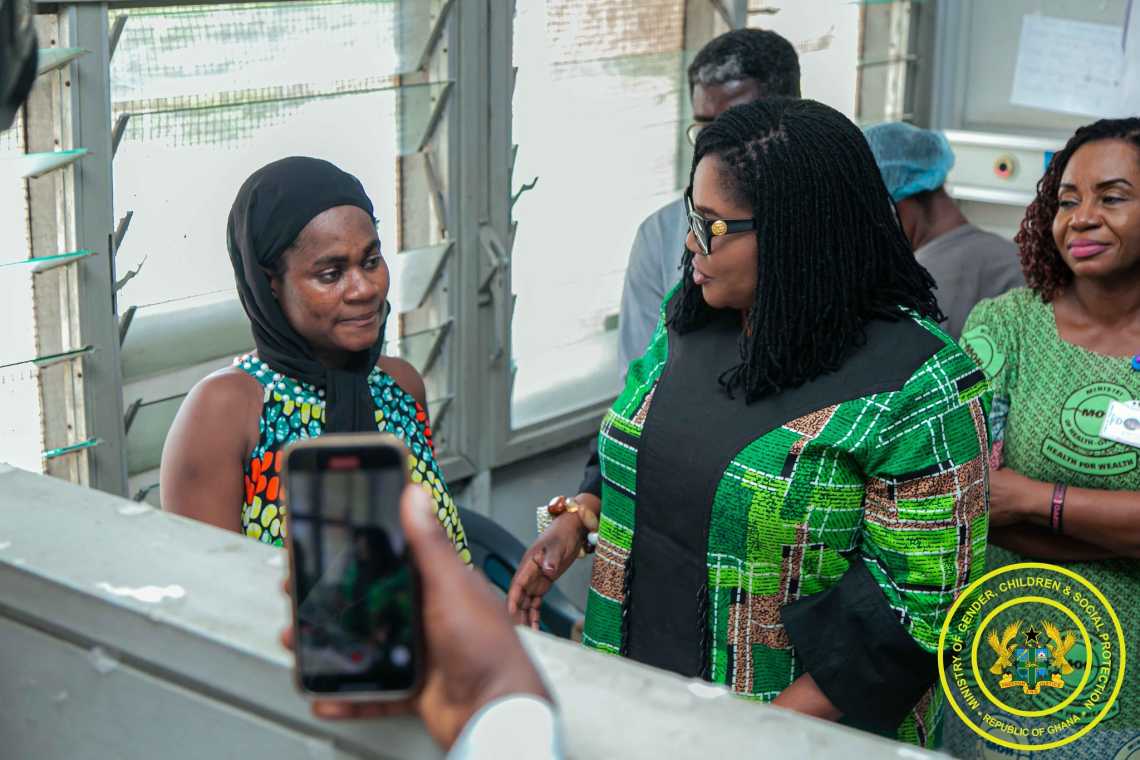
On March 21, 2026, Ghana joined the global community to observe World Down Syndrome Day under the theme "Together Against Loneliness." The day featured durbars and a "buddy walk" in Accra led by the Ghana Association of Down Syndrome, emphasizing that social isolation—not the disability itself—is the primary barrier to a fulfilling life.
While the Minister for Gender, Children and Social Protection, Hon. Dr. Agnes Naa Momo Lartey, used the occasion to reaffirm the government’s commitment to the vulnerable, the discourse has shifted. Parents and advocates are now challenging the adequacy of cash transfers, calling for a "Care Economy" that recognizes dignity over dependency.
1. The "LEAP" Debate: Is Cash Enough?
During the celebrations, Dr. Lartey highlighted the Livelihood Empowerment Against Poverty (LEAP) programme as a primary safety net. Under the 2026 Reset Agenda, the government has significantly increased its commitment to this flagship initiative.
LEAP Support Overview (2025/2026): | Category | 2025/2026 Status | Impact / Value | | :--- | :--- | :--- | | National Allocation | GH₵1.1 Billion | Highest allocation since inception. | | Household Reach | 400,000 Households | Expanding from 350,580 in 2025. | | Bi-monthly Grant | GH₵320 – GH₵530 | Indexed against inflation to preserve value. | | Eligibility | Severely disabled, elderly, OVCs. | Targeted at "vulnerable" households. |
Critics argue that while these transfers help with immediate survival, they reinforce the stereotype that disability equals poverty. Families are increasingly demanding Respite Care—professional centers where children can be safely left while parents work—rather than just "handouts."
2. The Human Face: Gifty and Caleb’s Story
The Inclusive Family Alliance Community Platform has become a vital space for sharing the "policy gaps" that LEAP cannot bridge. A mother identified as Gifty recently shared a harrowing account of leaving her son Caleb, who has cerebral palsy, alone at home while she sold sachet water to survive.
“I wish there was a place I could send him in the morning, go hustle, and return for him even if I had to pay.” — Special Mother Gifty
Her story underscores the urgent need for Institutional Non-Family Care options that complement home care, allowing highly-skilled parents to remain in the workforce.
3. The 2026 "Education Reset"
In a move toward systemic change, the government has moved beyond cash transfers into the realm of Free Special Needs Education. Effective January 1, 2026, President Mahama formally declared education for all persons with special needs free across Ghana.
Key Pillars of the New Education Policy:
-
Free Enrollment: Covering all 39 integrated and special needs schools nationwide.
-
Feeding Grant Increase: The daily allocation for learners was nearly doubled from GH₵8 to GH₵15.
-
Assistive Devices: Funding for hearing aids, Braille materials, and inclusive digital platforms through a GH₵65M–GH₵100M annual GETFund allocation.
-
District Funds: An increase in the District Assemblies Common Fund for persons with disabilities from 3% to 5%.
4. Building a "Care Economy"
Advocates like Mrs. Hannah Awadzi, Executive Director of the Inclusive Family Alliance, argue that the future lies in professionalizing the care sector. Unlike many industries, care work cannot be replaced by AI; it represents a sustainable career path for Ghanaian youth.
Proposed Holistic Vision:
-
Respite Care Centres: Community-based hubs providing temporary relief for caregivers.
-
NHIS Expansion: Covering specialized health conditions like congenital heart disease associated with Down syndrome.
-
Teacher Training: Specialized disability education for mainstream school teachers to ensure "Inclusion" isn't just a slogan.
The Bottom Line
The 2026 World Down Syndrome Day was a "Dignity Reset." While the expansion of LEAP and Free Special Needs Education represents significant progress, the lived experiences of parents like Gifty and Selina show that the "last mile" of disability support is respite and care. Ghana is moving toward a system where disability does not limit opportunity, but achieving this requires moving from pity-based handouts to rights-based infrastructure.