
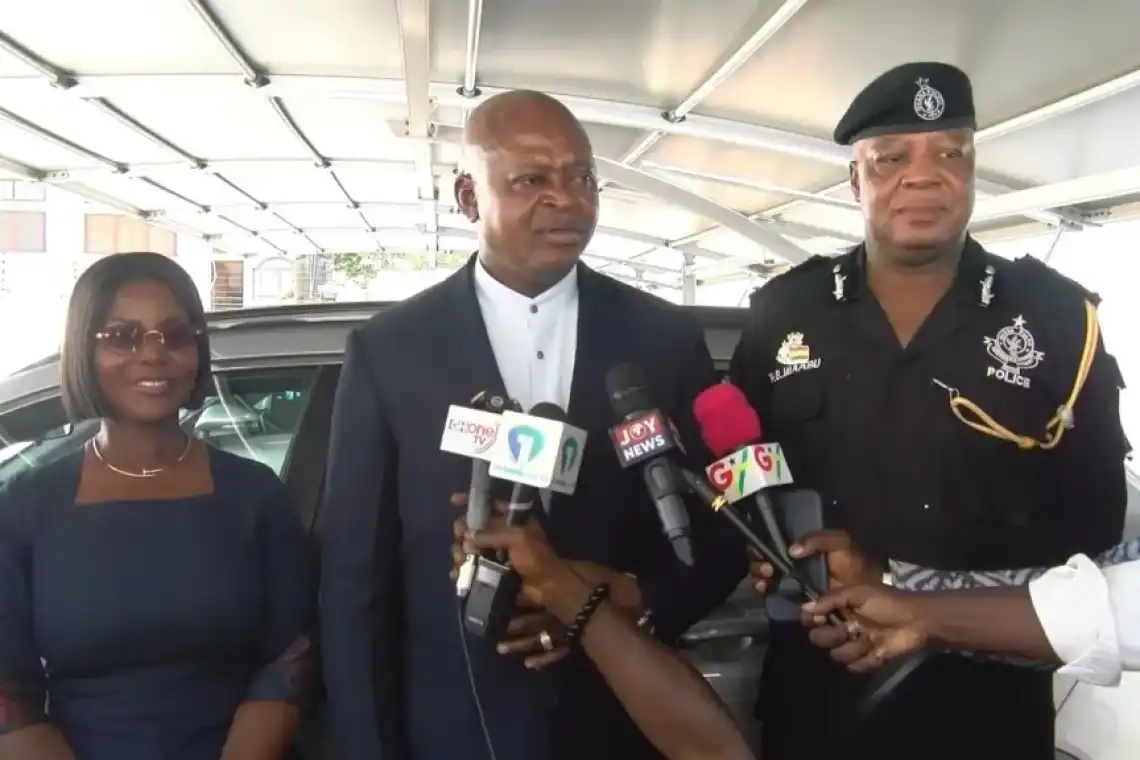
The era of "arguing with the traffic officer" is coming to a definitive end in Ghana. Mr. Joseph Bukari Nikpe, Minister of Transport, has announced that the Legislative Instrument (LI)
required to operationalize Traffitech-GH—Ghana's automated traffic law enforcement system—is expected to mature in Parliament by the end of March 2026.
During a high-level working visit to the Traffitech-GH headquarters on Thursday, the Minister assessed the readiness of the Ghana Police Service, the NRSA, and the DVLA to deploy a digital "invisible net" designed to catch speeders, red-light runners, and reckless drivers.
1. The Legal Countdown: Mandatory 21 Days
Under Ghanaian law, a Legislative Instrument must sit in Parliament for 21 sitting days before it "matures" into law.
-
Progress: As of March 12, 2026, the LI has completed 9 days.
-
Timeline: The Minister expects the law to be fully operational within the next two weeks (by March 27, 2026).
-
Mandate: Once passed, technology will legally complement human enforcement, providing "irrefutable digital evidence" for traffic prosecutions.
2. How Traffitech-GH Works: From Camera to Smartphone
Chief Superintendent Alexander Obeng, Project Coordinator, detailed a sophisticated, integrated workflow that links road cameras directly to the national database and the offender's phone.
The Enforcement Workflow:
-
Detection: A combination of 34 fixed cameras at hazardous junctions, mobile patrol cameras, and tripod-mounted devices capture violations (Speeding/Red-light).
-
Verification: Data (registration number, speed, time, location) is sent to a Central Back-Office.
-
Notification: The offender receives an SMS containing the fine amount and a link to view a video clip of their own violation.
-
Payment/Contest: The motorist can pay digitally or challenge the ticket through an online contestation system.
3. The Penalty and "Block" Mechanism
The 2026 system is designed to be "un-dodgeable" by integrating with other state services to ensure fine collection.
| Action Period | Consequence/Penalty |
| 0–14 Days | Standard Fine (Payable via digital channels). |
| Day 7 | Reminder SMS sent to the offender. |
| Day 15+ | 1% surcharge applied daily to the fine. |
| Persistent Default | DVLA Lockout: Cannot renew license or roadworthy. |
| Future Integration | Ghana Card Restriction: Potential block on public services via NIA collaboration. |
4. Current Infrastructure Readiness
The Ghana Police Service has already identified and "armed" the most dangerous intersections in the country based on years of accident data.
-
Fixed Cameras: Already installed at critical junctions to detect red-light jumping.
-
Mobile Speed Cameras: Mounted on police patrol vehicles to monitor major highways like the Accra-Kumasi and Accra-Cape Coast roads.
-
Portable Tripods: To be deployed in "stealth mode" in areas where residents report frequent speeding.
The Bottom Line
The Minister’s message was clear: "If the human side is not able to capture you, the technology will." By linking traffic fines to the DVLA and potentially the Ghana Card, the government is implementing a "Financial and Administrative Reset" on road discipline. For the first time, Ghanaian motorists will face a system where evidence is video-based and penalties are automated, aiming to drastically reduce the high rate of road fatalities in 2026.