
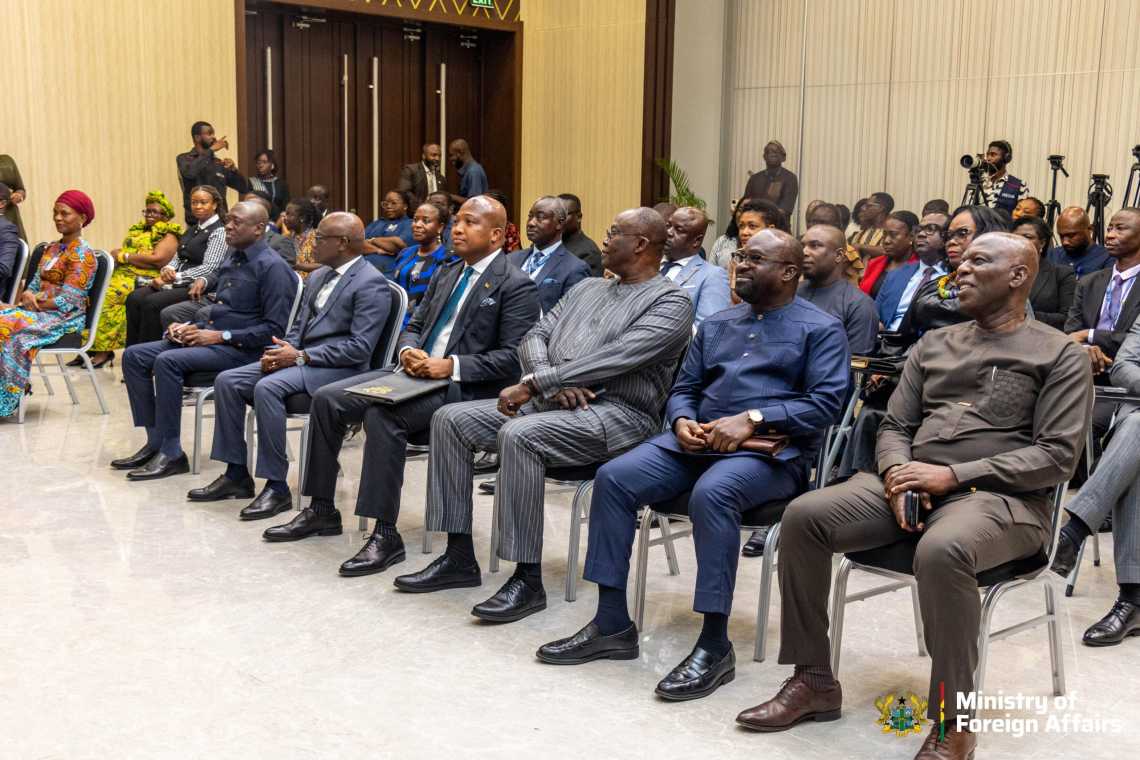
In a firm reassertion of historical narrative, Ghana’s Minister of Foreign Affairs, Mr. Samuel Okudzeto Ablakwa, has dismissed claims that Africa was an "equal or active participant" in the transatlantic slave trade. Addressing a press briefing in Accra on Tuesday, the Minister described such assertions as misleading "divide
and rule" strategies designed to dilute the gravity of what the United Nations has now officially declared the gravest crime against humanity.
The briefing follows the landmark March 25, 2026, UN General Assembly resolution, spearheaded by President John Dramani Mahama, which transitioned the global conversation from symbolic remembrance to a formal framework for reparatory justice.
1. Dismantling the "Shared Enterprise" Myth
Minister Ablakwa clarified that while isolated local intermediaries existed, they did not possess control over the design, financing, or legal codification of the slave system.
-
External Drivers: The system was sustained by transcontinental networks, foreign demand, and insurance regimes created outside Africa.
-
The Scale of Injustice: Over 12.5 million Africans were forcibly transported over 300 years, with millions more dying during capture.
-
Systemic Imposition: The Minister argued that any African involvement occurred within a context of extreme coercion and unequal power relations imposed by external actors.
2. The UN Resolution: A Turning Point for Reparations
The resolution, co-sponsored by 70 countries and supported by 123 Member States, marks the beginning of the African Union’s Decade of Action on Reparations (2026–2036).
The Roadmap for Reparatory Justice: | Component | Objective | | :--- | :--- | | Formal Apologies | Acknowledging the structural and psychological impact of chattel slavery. | | Restitution | The return of looted cultural artifacts and ancestral remains. | | Compensation | Addressing the centuries of stolen labor and economic suppression. | | Institutional Reform | Dismantling enduring global structures of racial inequality. |
3. Constructive Engagement, Not Retribution
Despite the "historic victory," Minister Ablakwa emphasized that Ghana’s stance remains one of constructive engagement rather than confrontation. He noted that Ghana maintains strong diplomatic ties even with nations that abstained or voted against the resolution.
"We are not out for retribution... we are doing this in very good faith. This victory marks only a significant beginning." — Samuel Okudzeto Ablakwa
4. Context: A Wednesday of National "Resets"
The Foreign Minister’s briefing aligns with a wave of "Accountability Resets" occurring across Ghana this Wednesday, April 1, 2026:
-
Diplomacy: New Chinese Ambassador Cong Song presented credentials, pledging support for Ghana’s Reset Agenda and the UN resolution.
-
Governance: President Mahama fast-tracking the Independent Value for Money Office to investigate "Big Push" procurement allegations.
-
Fiscal: BoG Governor Dr. Johnson Asiama reframing $13.8B in reserves as the driver for sub-20% lending rates.
-
Education: The Upper East Regional Committee calling for a "Pedagogical Reset" in teacher postings for kindergartens.
-
Health: The Ghana AIDS Commission marking 40 years of progress, declaring HIV a "manageable chronic condition."
The Bottom Line
Minister Ablakwa’s address represents a "Narrative Reset." By rejecting the "equal participant" myth, Ghana is ensuring that the path toward reparations is built on accurate history rather than strategic distortions. As Ghana collaborates with CARICOM and the African Union to translate the UN resolution into action, the focus remains on education reform and the restitution of Africa’s stolen heritage.