
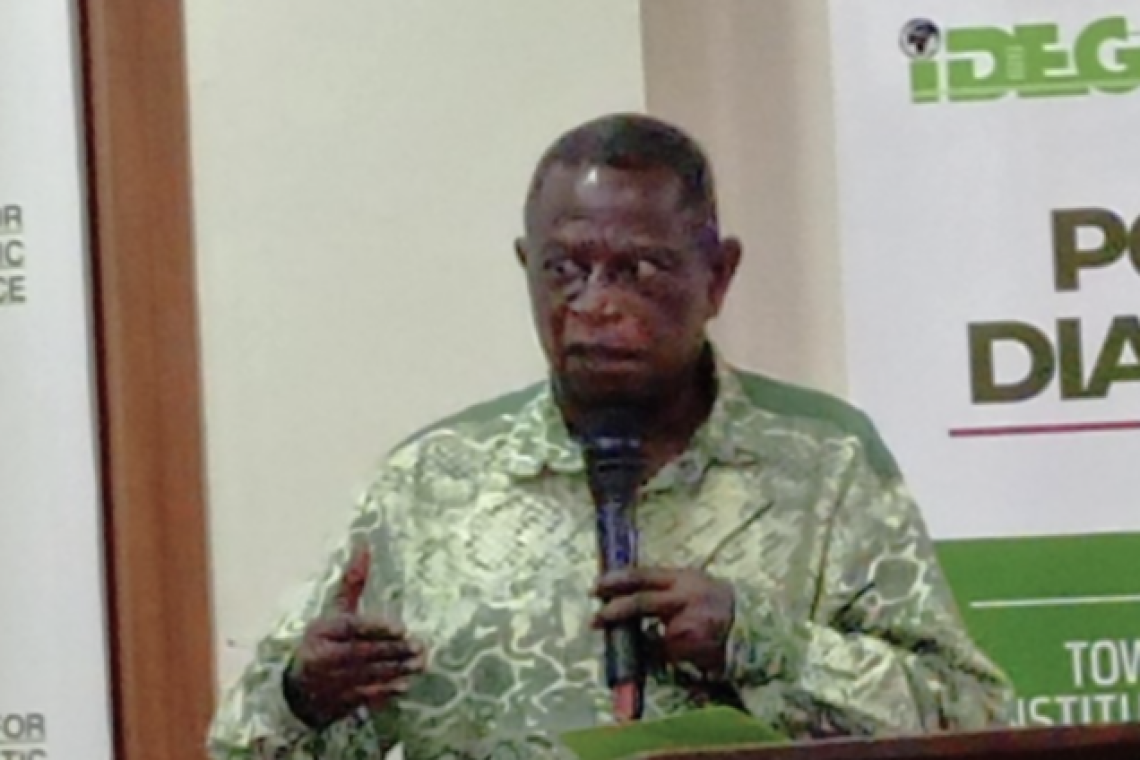
In a bold move to break the decades-long deadlock over constitutional amendments, the Institute of Democratic Governance (IDEG) has proposed the creation of a Multiparty Democracy and Constitutional Reform Commission (MDCRC). Speaking at a policy dialogue in Accra, Senior Research Fellow Mr. Kwasi Jonah argued that a permanent, technical body is the only way to ensure that reform recommendations are actually implemented, regardless of which
political party holds power.
The proposal comes at a critical juncture as the Mahama administration prepares to establish the Constitutional Review Implementation Committee (CRIC), following a 15-year cycle of stalled attempts dating back to 2010.
1. The MDCRC: A "Technical Shield" Against Politics
IDEG’s core argument is that constitutional reform in Ghana has failed because it is currently treated as a "piecemeal" political project rather than a continuous technical process. The proposed MDCRC would act as an independent regulatory body, separate from the Electoral Commission.
Key Functions of the MDCRC:
-
Continuous Monitoring: Collecting reform ideas over a 20-year cycle rather than waiting for "crisis" reviews.
-
Implementation Oversight: Ensuring that once a reform is agreed upon, it is carried through even if the government changes.
-
Political Party Regulation: Administering the regulations that govern how political parties operate within the democratic framework.
-
Referendum Coordination: Presenting bundled proposals for public approval during national election cycles to save resources.
2. Ending the "Wasted Resources" Cycle
Mr. Jonah highlighted that since 2010, millions of cedis have been spent on review commissions, only for successive governments to abandon the work of their predecessors.
"Constitutions are reviewed every nineteen or twenty years. If you have a body like this, they collect the ideas and make sure they are implemented. It doesn’t matter which party is in power." — Kwasi Jonah, IDEG
Professor Kofi Quashigah, former Dean of the University of Ghana Law School, supported this "Embedding Reset," noting that a permanent body would allow for comprehensive rather than reactionary changes to the supreme law of the land.
3. The Gender Gap in Reform
The dialogue also addressed the "Inclusion Reset." Ms. Becky Enyonam Ahadzi, Coordinator of the Affirmative Action Law Coalition, pointed out a major gap in previous reform efforts:
-
The Problem: Reforms have historically focused on appointed positions (Ministers, MMDCEs).
-
The Reality: Women continue to face systemic discrimination in elected roles, where the "gatekeeping" of major political parties prevents them from contesting for power.
-
The Demand: Any new constitutional framework must move beyond symbolic appointments to address the structural barriers in elective politics.
The Bottom Line
The IDEG proposal represents a "Governance Reset." By moving the MDCRC agenda to Parliament, IDEG is attempting to bypass the "Executive veto" that has stalled previous reviews. As the nation approaches the April 15 launch of major social programs like Free Primary Healthcare, the debate over how we govern ourselves has never been more urgent. The question remains: will Parliament embrace a permanent commission, or will constitutional reform remain a "sacrificial sweat" that evaporates with every change in government?