
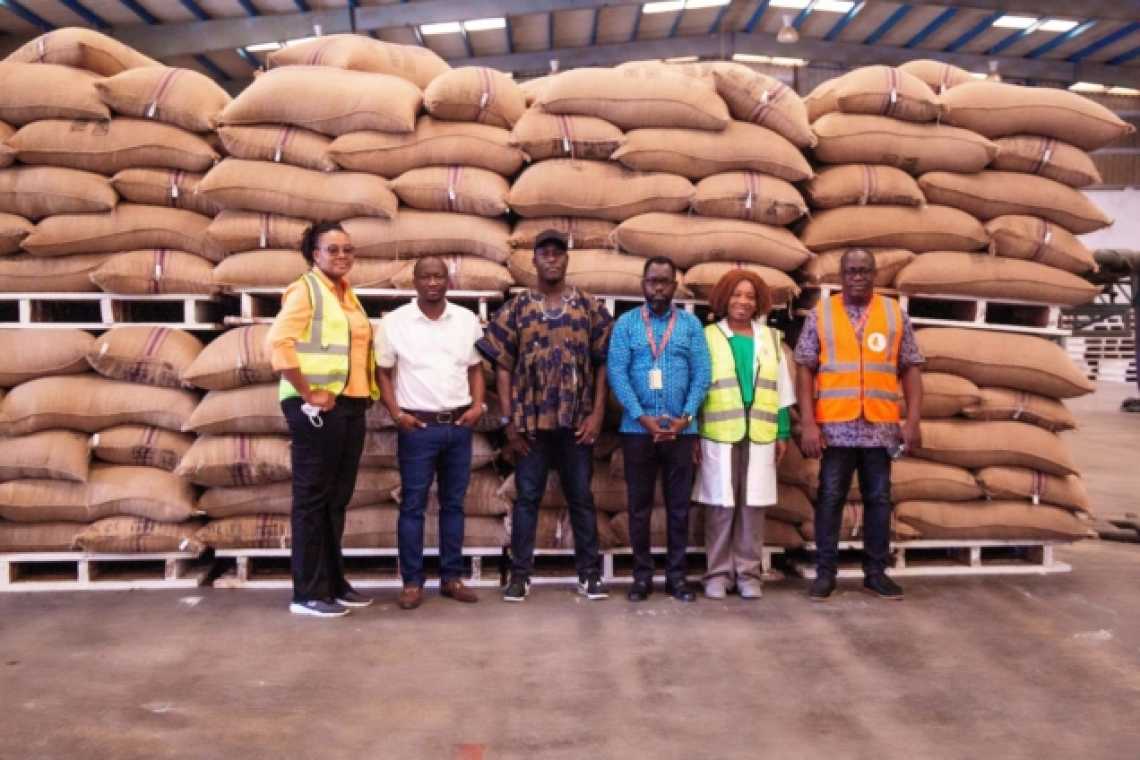
In a pointed policy brief aimed at stabilizing the discourse around Ghana’s "national institution," the Managing Director of the Cocoa Marketing Company (CMC) (Ghana) Limited, Dr. Wisdom Kofi Dogbey, has called for a sophisticated "reset" in how the nation discusses cocoa reforms. The brief, shared with the Ghana News Agency, warns that persistent
mischaracterization of the country’s marketing architecture threatens to undermine investor confidence and the reliable inflow of foreign exchange.
Dr. Dogbey argues that well-intentioned reforms could accidentally disrupt a system that currently provides global processors with a level of predictability rarely found in other commodity markets.
1. Marketing vs. Purchasing: Clearing the Confusion
A central theme of the policy brief is the "conflation" of distinct roles within the cocoa value chain. Dr. Dogbey noted that public conversation often mistakenly reduces the entire sector to a single "headline or political soundbite."
The Distinct Pillars of the Architecture:
-
The Farm Gate: Managed by farmers and Licensed Buying Companies (LBCs) for local purchasing.
-
Quality Assurance: Independent verification to maintain Ghana’s premium status.
-
The Exclusive Interface: The CMC, which acts as the sole commercial and risk-management bridge to international buyers.
-
The Trading Strategy: A forward sales program tied to international benchmarks like ICE London, which ensures price stability and manages counterparty risks.
2. The Risk of "Oversimplified Narratives"
The CMC cautions that treating cocoa marketing as a simple transaction ignores the complex risk management functions that keep the industry afloat during global price volatility.
| Misconception | The Reality (Per CMC Brief) |
| "Privatize Marketing" | Could weaken Ghana’s collective bargaining power and quality control. |
| "Buying = Marketing" | Purchasing at the farm gate is a logistics function; marketing is a global commercial strategy. |
| "Price-Setting is Trading" | Fixed producer prices are a social safeguard, not the actual global trading strategy. |
3. Regulatory Scrutiny: The EUDR Factor
The brief highlights that Ghana’s structured model is a competitive advantage in the face of new international regulations, specifically the European Union Deforestation Regulation (EUDR).
Because the CMC operates as a centralized interface, it can more efficiently guarantee delivery performance and traceability compliance for international manufacturers who are now under intense legal pressure to prove their cocoa is "deforestation-free." Reforms that fragment this system could make it harder for Ghana to meet these stringent EU standards.
4. Proposed Solutions: Transparency and Education
To "demystify" the sector, Dr. Dogbey and the CMC have proposed a three-pronged transparency roadmap for 2026:
-
Fact-Based Policy Discussions: Moving away from political rhetoric toward data-driven analysis of marketing intelligence.
-
Structured Media Engagement: Training for journalists to improve the accuracy of reporting on the cocoa value chain.
-
Enhanced Public Education: Helping Ghanaians understand that cocoa is not just a crop, but a high-stakes global financial operation.
The Bottom Line
Dr. Dogbey’s message to policymakers is clear: "Cocoa is a national institution." While reforms are necessary, they must be built on the foundation of institutional continuity. By protecting the "commercial and risk management" functions of the CMC, Ghana ensures that it remains a "Gold Standard" in the global cocoa market, even as supply chains face increasing global instability.