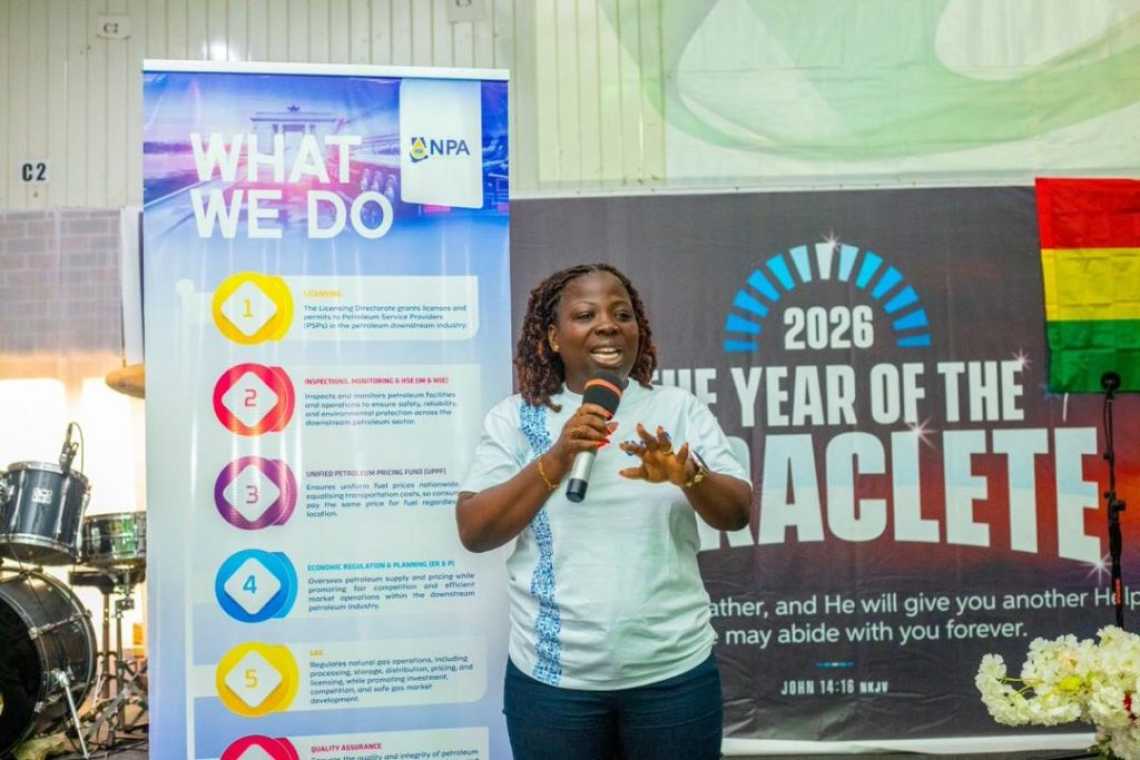
In an urgent response to the recurring hazards of highway fuel theft, the National Petroleum Authority (NPA) has intensified its public safety outreach across the Eastern Region. The initiative, dubbed the “Stay Back, Stay Safe” campaign, aims to dismantle the dangerous culture of siphoning fuel from overturned
tankers—a practice officials describe as a "potential death trap" for local communities.
A high-level delegation, led by the Director of Consumer Services, Mrs. Eunice Budu-Nyarko, spent the week engaging transport operators, students, and traders across Koforidua, Suhum, Nsawam, and Bunso to reinforce the life-saving protocols of petroleum safety.
1. The 400-Metre "Death Trap"
A primary focus of the campaign is the extreme volatility of tanker accident scenes. Mrs. Maureen Adwoa Duori, Head of Consumer Education, issued a stark warning to the public—and specifically to "content creators"—against rushing to these scenes for social media engagement.
The Physics of a Tanker Fire:
-
Flash Expansion: A tanker fire can spread up to 400 metres within seconds.
-
The Social Media Risk: Students at Koforidua Technical University and All Nations University were cautioned that filming an accident scene is often a fatal distraction.
-
Immediate Action: The NPA advises citizens to vacate the area immediately and alert the Ghana National Fire Service.
2. Consumer Protection: The "Ntease Kuruwa"
Beyond emergency safety, the NPA is resetting consumer expectations regarding fuel quality and quantity at the pump. Mr. Johnson Gbagbo Jnr., Head of Consumer Data Analytics, emphasized that the Authority is working with the Ghana Standards Authority to ensure all fuel pumps are accurately calibrated.
Verification Tools for Consumers:
-
The 10-Litre Standard: Consumers are encouraged to use the standard 10-litre measuring can, popularly known as “Ntease Kuruwa”, if they suspect they are being shortchanged.
-
LPG Adoption: The team also campaigned for a shift from charcoal and firewood to Liquefied Petroleum Gas (LPG), noting that smoke inhalation from traditional fuels is as harmful as heavy cigarette smoking.
3. Regional Outreach: From Suhum to Koforidua
The delegation utilized a multi-platform approach to reach the diverse Eastern Region demographic:
-
Media Outreach: Intensive radio discussions on Bryt FM, Afeema FM, and Radio 1.
-
Community Engagement: Direct dialogue with drivers and traders in busy transit hubs like Suhum and Nsawam.
-
Tertiary Education: Targeted seminars at the SDA College of Education to influence the next generation of safety-conscious citizens.
4. Context: A Wednesday of National "Resets"
The NPA’s safety drive coincides with a wave of "Accountability and Service Resets" observed across Ghana this Wednesday, April 1, 2026:
-
Health: Bono East Director Dr. Freeman Samani reporting a historic 100% postnatal coverage, while Nkwanta North calls for an "Access Reset" for the Sibi CHPS compound.
-
Governance: President Mahama fast-tracking the Independent Value for Money Office to investigate "Big Push" procurement allegations.
-
Diplomacy: Foreign Minister Samuel Okudzeto Ablakwa rejecting the "equal participant" narrative of the slave trade following Ghana's UN victory.
-
Finance: BoG Governor Dr. Johnson Asiama reframing $13.8B in reserves as the catalyst for reducing lending rates below 20%.
-
Sports: A "Technical Reset" for the Black Stars following the departure of Otto Addo and a narrow 2-1 loss to Germany in Stuttgart.
The Bottom Line
The Eastern Region tour represents a "Petroleum Safety Reset." By identifying the 400-metre hazard zone and empowering consumers with the Ntease Kuruwa, the NPA is attempting to ensure that "sacrificial sweat" in the region isn't lost to preventable accidents or pump inaccuracies. As the "Stay Back, Stay Safe" message spreads, the Authority's goal is to move Ghana closer to a zero-fatality record for tanker-related incidents.