
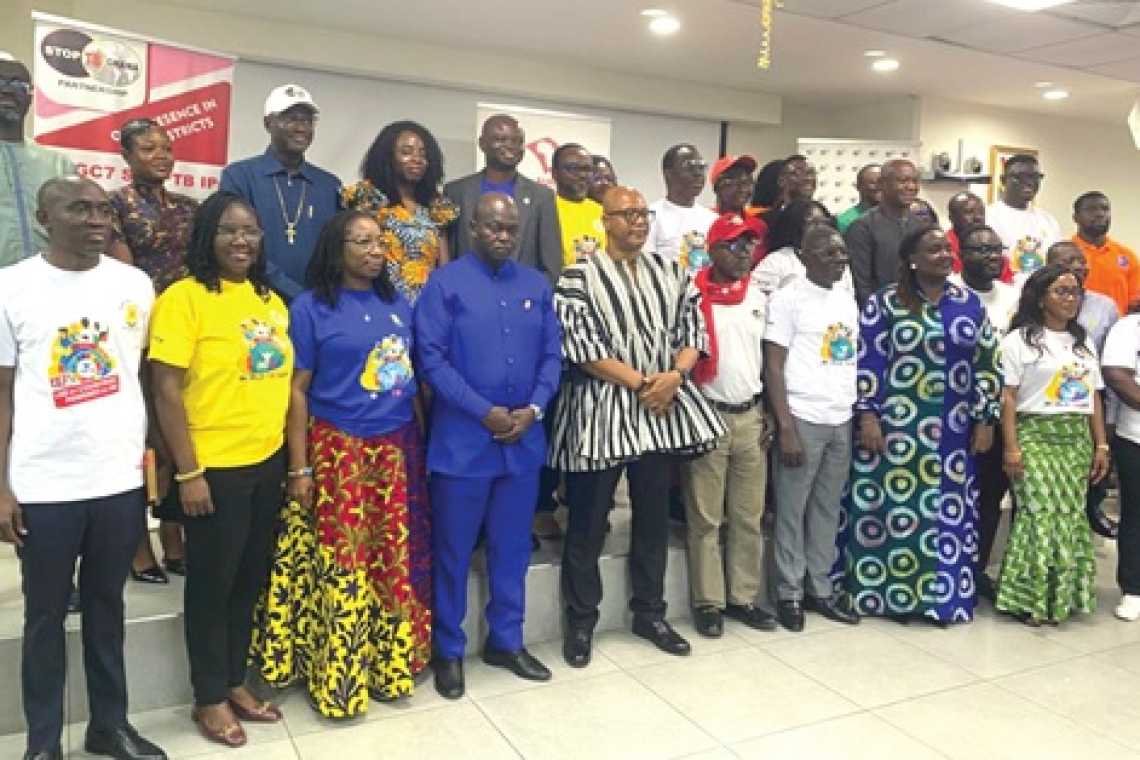
While Ghana has achieved one of the highest treatment success rates in Africa, the National TB Control Programme (NTP) has issued a sobering disclosure: more than half of the country's Tuberculosis cases remain undetected.
Speaking at the launch of World TB Day 2026, Acting Programme Manager Dr. Bernard Ziem revealed that Ghana currently identifies only 49.1% of its estimated 44,000 annual TB cases. This leaves approximately 22,400 people undiagnosed, untreated, and actively transmitting the disease within their communities—a scenario experts describe as "unsustainable."
1. The "Detection vs. Success" Paradox
According to the Global Tuberculosis Report 2024, Ghana is classified in a unique and risky category: Low Case Detection / High Treatment Success. While Ghana excels at curing the patients it finds, it is failing to find enough patients to break the cycle of infection.
| Performance Metric | Current Status | Global/National Target |
| Case Detection Rate | 49.1% | >90% |
| Treatment Success Rate | High (Top Tier) | Maintain >90% |
| GeneXpert Coverage | 92% (with new units) | 100% |
| Digital X-ray Coverage | 8% of National Need | 100% |
2. The Infrastructure Deficit: Machines vs. Districts
Dr. Ziem highlighted a critical shortfall in diagnostic hardware that prevents the "Active Case Finding" necessary to reach 2030 elimination goals.
-
GeneXpert Shortfall: Despite the recent addition of 15 machines, the country still faces a shortfall of 32 GeneXpert units to reach optimal testing capacity.
-
The X-ray Gap: Mobile digital X-ray units are the frontline tools for community screening. Currently, only 31 units serve all 261 districts in Ghana.
-
The "Facility Bias": Most detection currently happens when a patient feels sick enough to visit a hospital. Dr. Ziem argued that "taking services to high-risk communities" yields significantly more cases than waiting for facility-based visits.
3. Tapping the Private Sector & Community Volunteers
A major strategic "blind spot" in the current response is the private health sector.
-
The Private Sector Gap: Private facilities handle 40% of outpatient care in Ghana but remain underutilized in TB reporting and detection.
-
The Volunteer Power: Conversely, the TB Voice Network and Stop TB Partnership volunteers—often survivors themselves—already contribute nearly 10% of all detected cases, proving that community-led detection is highly effective.
4. The 2030 Roadmap: Joint TB/HIV Strategic Plan
The World Health Organization (WHO), represented by Dr. Fiona Braka, has pledged continued support but urged the government to accelerate the implementation of the new Joint TB/HIV National Strategic Plan (2026–2030).
Priority Actions for 2026-2030:
-
Domestic Investment: Reducing reliance on external donors to close the funding gap.
-
Private Sector Integration: Incentivizing private clinics to screen and report TB cases.
-
Digital Health Expansion: Deploying more mobile AI-powered X-ray vans for rural "hotspot" screening.
-
Vulnerable Population Outreach: Focusing resources on high-density urban areas and mining communities.
The Bottom Line
The 2026 TB disclosure is a "Reality Reset." Ghana is winning the battle at the hospital bedside but losing the war in the community. As Dr. Bernard Ziem noted, finding the "missing cases" is the only way to move from a "Low Detection" country to an "Elimination" country. With the 2030 deadline approaching, the focus must now shift from treating the few to finding the many.