
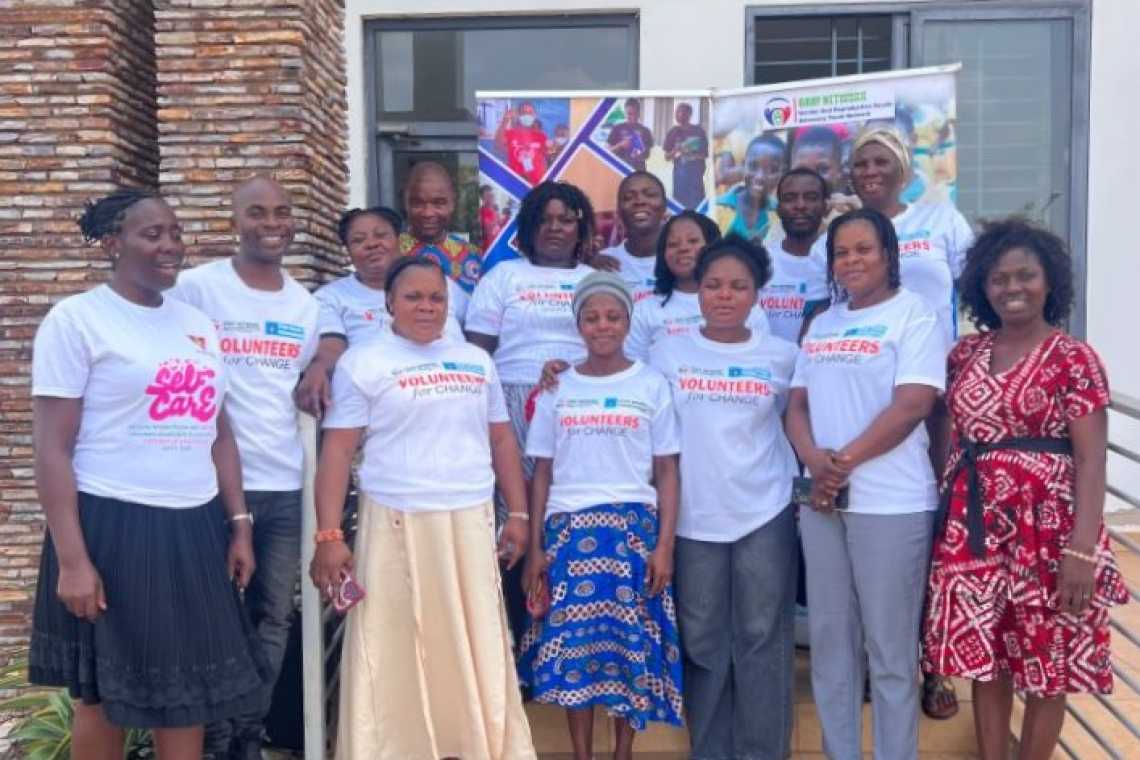
In a strategic move to secure the future of adolescent health in the Volta Region, Gray Network, with the support of the STAR-Ghana Foundation, has launched Phase Two of its flagship capacity-building initiative. The project, titled "Strengthening Volunteer-Led SRHR, MHM and Life Skills Education," recently concluded intensive refresher sessions in Sogakope
and Adidome.
Unlike traditional top-down health interventions, this "Sustainable Reset" relies on 12 highly trained community anchors—including teachers, nurses, and seamstresses—to dismantle the barriers of stigma and misinformation surrounding menstruation and reproductive rights.
1. The "Consolidation" Strategy
Phase Two is not just about starting over; it is about "consolidating gains." Having successfully completed the initial phase, Gray Network is now transitioning from basic training to advanced monitoring, documentation, and impact measurement.
The 2026 Training Core:
-
Participants: A multidisciplinary team of 12 (Nurses, Teachers, Seamstresses, and Community Health Volunteers).
-
Methodology: Shifted to participatory teaching, including storytelling, peer learning, and live demonstrations.
-
Technical Support: Facilitated by experts from the Ghana Health Service (GHS), Ghana Education Service (GES), and the National Commission for Civic Education (NCCE).
2. The Toolkit: Data-Driven Accountability
Programme Manager Mr. Godsway Mensah introduced a suite of new digital and manual tracking tools to ensure that every volunteer hour translates into a measurable change in adolescent lives.
| Tool | Purpose | Impact Goal |
| Menstrual Impact Assessment | Tracking the use of reusable pads and hygiene habits. | Reduced health infections. |
| School Attendance Monitor | Linking MHM education to girl-child presence in class. | Zero "period-related" dropouts. |
| Story-of-Change Framework | Documenting qualitative shifts in community attitudes. | Reducing social stigma. |
| Peer Educator Templates | Standardizing information flow from volunteer to student. | Accuracy in SRHR education. |
3. The "Seamstress-Educator" Model
One of the most innovative aspects of the Gray Network approach is the involvement of local vocational professionals. Ms. Abena, a seamstress and volunteer in Sogakope, highlighted how the training has allowed her to integrate health education into her daily work.
-
Reusable Sanitary Pads: Volunteers are now guiding young girls on the proper "use and maintenance" of reusable pads, a critical cost-saving measure for rural families.
-
Beyond the Classroom: Community health volunteers are now extending their reach to parents and guardians, tackling the root of menstrual stigma within the home.
4. Active Citizenship and Sustainability
The project is as much about civic responsibility as it is about health. By framing SRHR (Sexual and Reproductive Health and Rights) as a component of "Active Citizenship," Gray Network is encouraging residents of the Tongu districts to view the well-being of adolescents as a collective developmental duty.
The Bottom Line
The Gray Network intervention is a "Sustainability Reset." By empowering local volunteers with both clinical knowledge and professional reporting tools, the Sogakope and Adidome communities are no longer waiting for external aid—they are building their own support systems. As Mr. Mensah noted, the goal is simple: improved awareness, reduced stigma, and a future where no girl in Tongu misses school because of her period.