
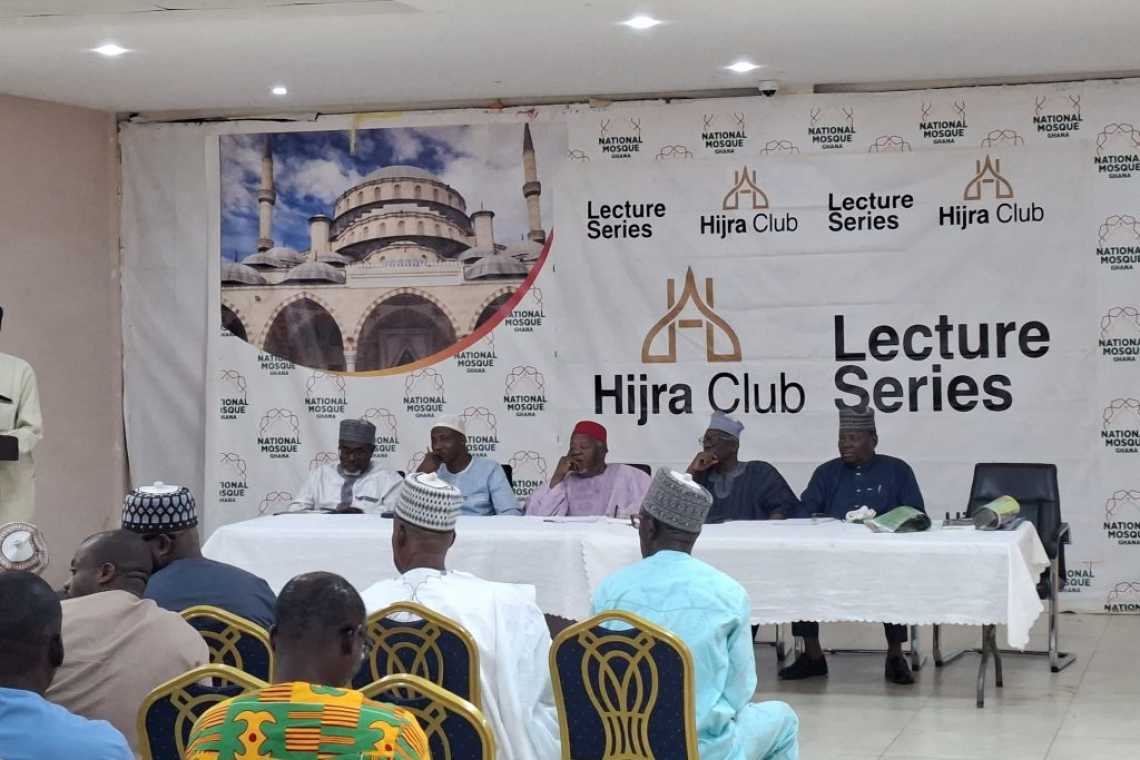
At the 2026 Hijra Club Ramadan Lectures, held at the National Mosque Complex, senior academic Dr. Haruna Zagoon-Sayeed delivered a compelling call for a total reorientation of
Islamic education in Ghana. He warned that the current "fragmented and sectarian" approach is diluting the community’s resources and leaving Muslim learners increasingly marginalized in the national educational landscape.
Addressing a gathering of scholars, parents, and community leaders, Dr. Zagoon-Sayeed argued that the community possesses ample wealth and influence, but lacks the unified coordination necessary to turn those resources into measurable academic excellence.
1. The "Minority & Divided" Warning
Dr. Zagoon-Sayeed offered a blunt assessment of the community's current standing, noting that internal divisions between different Islamic organizations and sects act as a barrier to government and international support.
-
The Problem: Isolated, sectarian deployment of resources.
-
The Consequence: A "diluted impact" that fails to address deep-rooted challenges in infrastructure and teacher development.
-
The Solution: A unified, national coordinated effort to advocate for the targeted needs of Muslim learners.
"When you are a minority and you are also divided, nobody will take care of you." — Dr. Haruna Zagoon-Sayeed
2. Reviving the "Model Islamic School" Template
A central pillar of the proposed reform is the revival of the Model Islamic School initiative. Years ago, a pilot program selected a small fraction of schools to receive specialized upgrades, which yielded significant results.
The Model School Data:
-
Total Islamic Schools in Ghana: 2,000+
-
Initially Selected Model Schools: ~40
-
Interventions: Enhanced learning facilities, specialized textbooks, and infrastructure upgrades.
-
The Challenge: Sustainability has plummeted due to a lack of consistent community funding and limited state follow-through.
3. The "Fatherhood Gap" in Academic Support
Dr. Zagoon-Sayeed didn't shy away from cultural critiques, specifically calling out the lack of engagement from Muslim fathers in their children's schooling.
-
Parenting Committees: He proposed the creation of formal committees to guide parents on their roles.
-
Gender Imbalance: He noted that while mothers are often present at school activities, fathers are frequently absent, rarely following up on attendance or progress.
-
The "No-Miss" Rule: He advocated for a strict protocol where no child misses a class without the immediate knowledge of both parents and teachers.
4. Strategic Roadmap for Community Leaders
To ensure that government assistance is effective, Dr. Zagoon-Sayeed urged leaders to stop duplicating efforts and start pooling resources toward three specific priorities:
| Priority Area | Action Item |
| Infrastructure | Modernizing classrooms and sanitation in the 2,000+ Islamic schools. |
| Learning Materials | Ensuring every student has access to modern textbooks alongside Islamic texts. |
| Teacher Development | Professionalizing the teaching staff to deliver a "quality modern education." |
| Identity Preservation | Balancing secular academic excellence with Islamic values. |
The Bottom Line
The 2026 Hijra Club lecture serves as a "Call to Action" for a communal Educational Reset. By shifting from sectarian competition to institutional collaboration, Ghana's Muslim community can move from managing 2,000 fragmented schools to overseeing a powerful, unified network of excellence.