
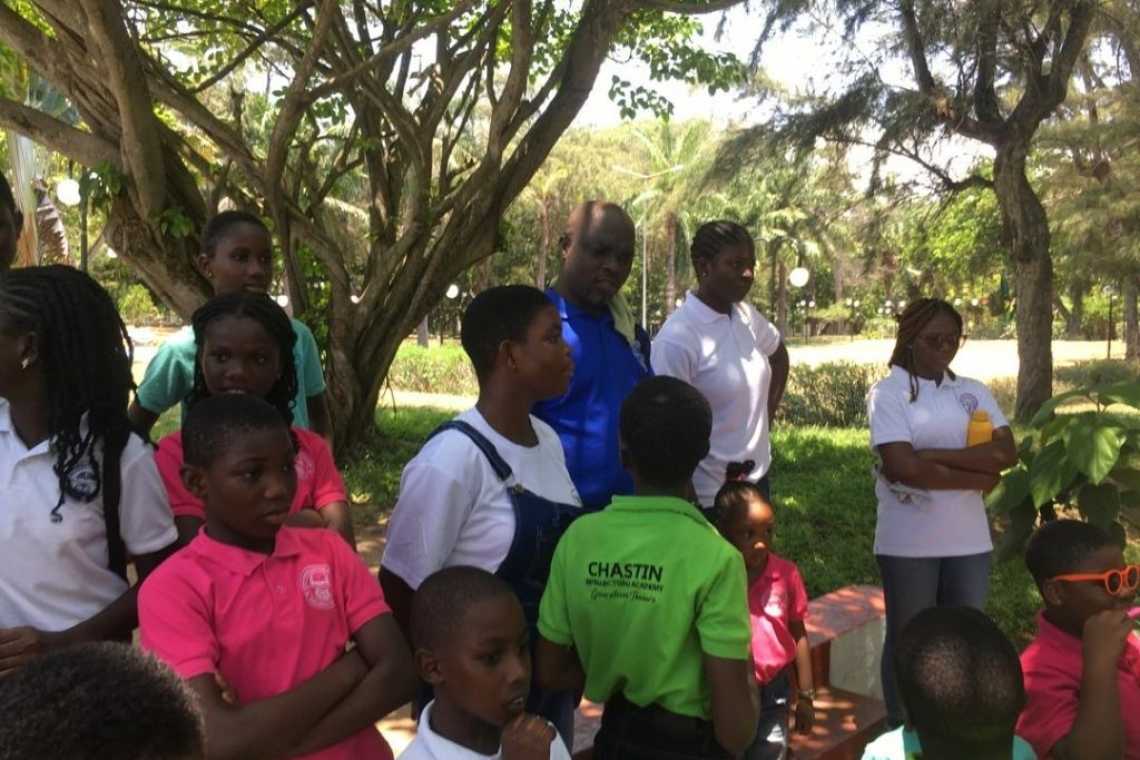
In a vibrant display of "Education in Motion," basic schools across the Greater Accra and Central Regions have transformed their holiday break into a live classroom. Students from institutions such as Chastin Intellectuals Academy and Royals of Shakespeare International School have embarked on a series of educational excursions to the Kwame Nkrumah Memorial Park and Osu Castle, aiming to turn abstract historical lessons into tangible experiences.
According to facilitators, these trips are not mere outings but a core part of a modernized curriculum designed to foster experiential learning and improve knowledge retention among the "Smartphone Generation."
1. Touching History: The Nkrumah Legacy
At the Kwame Nkrumah Memorial Park, students moved beyond the dates in their history books to interact with the personal life of Ghana’s first President. Guided tours of the museum provided a rare "visual bridge" for learners.
Artifacts Observed by Students:
-
Personal Belongings: Dr. Nkrumah’s mattress, mirror, and his famous Oware board.
-
Musical & Professional Tools: His piano and the iconic presidential suits.
-
The Liberation Grounds: Students engaged with the inscriptions on the walls, documenting the journey to 1957 independence.
2. The Pedagogy of the "Visual Learner"
Master Ezra Nyametse Shardey, a Grade 5 facilitator, emphasized that these trips are essential for different learning styles. For visual and kinesthetic learners, seeing the "reality" of what is described in textbooks is the key to deep understanding.
Benefits of the 2026 Excursion Model: | Benefit | Impact on Student | | :--- | :--- | | Contextual Clarity | Facilitators can use real-life examples to explain complex political concepts. | | Bonding | Strengthens the relationship between students and teachers outside formal walls. | | Retention | Physical interaction with sites creates "lasting memories" that aid exam recall. | | Global Perspective | Students interacted with international tourists, highlighting Ghana’s global significance. |
3. Bridging the Theory-Practice Gap
The "Education Reset" of 2026 places a heavy premium on hands-on learning. By visiting Osu Castle, students were able to contrast the colonial administrative history of the castle with the Pan-Africanist liberation story told at the Memorial Park. This comparative history approach allows learners to develop critical thinking skills regarding Ghana’s evolution.
4. Context: The 2026 "Social and Educational Reset"
The surge in holiday educational trips aligns with a broader national trend of rethinking traditional systems in March 2026:
-
Legal Education: Parliament passed the Legal Education Reform Bill to decentralize professional training and widen access.
-
Special Needs: The government’s move toward Free Special Needs Education with increased GETFund support.
-
Cultural Tourism: Stakeholders in Ho calling for "Corporate Agbadza" to integrate traditional dance into formal events.
-
Infrastructure: Increased scrutiny on the "Big Push" road contracts to ensure value for taxpayers.
The Bottom Line
The 2026 holiday excursions represent an "Academic Reset." As schools in Accra and Tema move toward more immersive experiences, they are addressing the long-standing critique that Ghanaian education is too focused on rote memorization. For students like those at Chastin Intellectuals Academy, history is no longer just a story told by a teacher—it is a piano they have seen, a mattress they have stood beside, and a legacy they now feel a part of.