
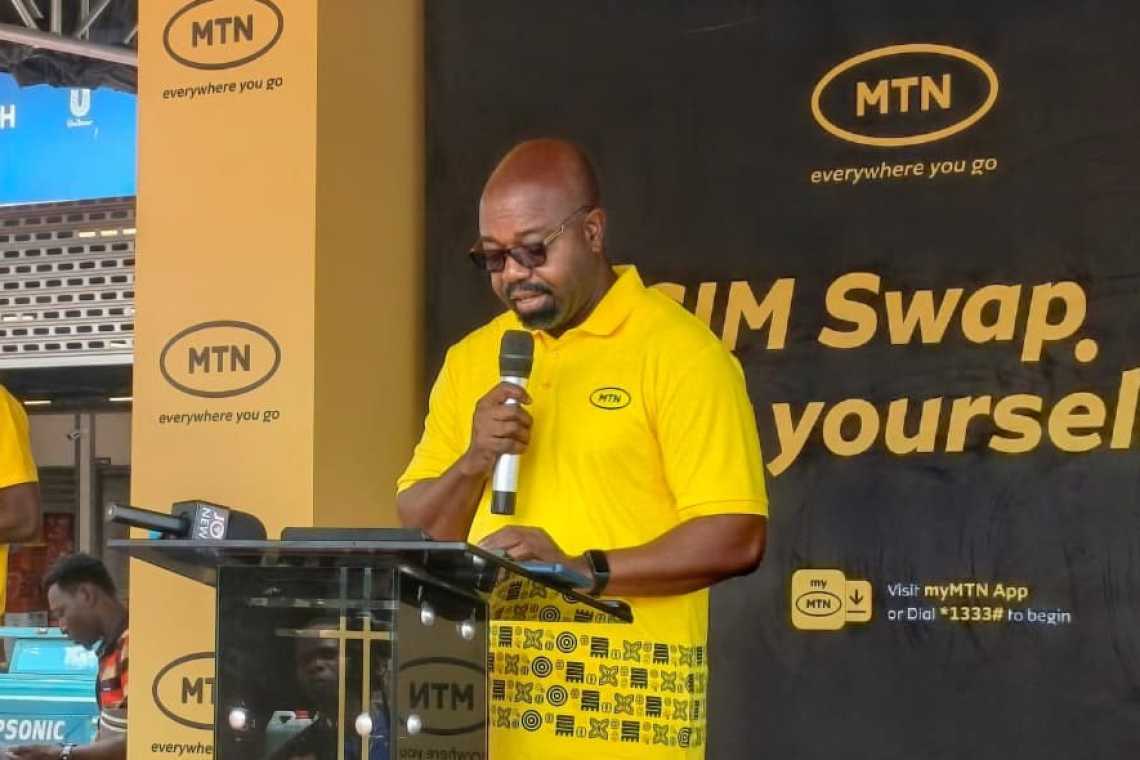
In a massive "Digital Reset" for the telecommunications sector, MTN Ghana has officially launched its nationwide Self-Service SIM Swap platform. Announced in Ho, the capital of the
Volta Region, the initiative allows prepaid customers to replace lost, damaged, or faulty SIM cards independently using the MyMTN App or USSD codes, eliminating the need for long queues at service centers.
The launch, strategically timed to coincide with Ghana’s 69th Independence anniversary month, aims to process a significant portion of the 250,000 SIM swap requests the company receives every month.
1. The Digital Workflow: How it Works
The new system replaces the traditional "Service Center visit" with a secure, biometric-backed digital process. Customers must first purchase a blank SIM card from an authorized vendor before initiating the swap.
Steps to a Self-Service Swap:
-
Access: Open the MyMTN App or dial *1333#.
-
Scan: Scan the barcode of the new blank SIM card.
-
Selection: Choose the reason for the swap (Lost, Damaged, or Faulty).
-
Security Check: Perform a live facial scan for biometric verification.
-
Completion: The system validates the data against the National ID database, and the new SIM is activated.
2. Security First: Combating Fraud with Biometrics
Historically, SIM swapping has been a high-risk area for identity theft and Mobile Money (MoMo) fraud. To address this, MTN has integrated advanced safeguards:
-
Live Facial Scanning: The system requires a real-time "liveness" test to ensure the person initiating the swap is the actual owner of the SIM.
-
NCA Oversight: The National Communications Authority (NCA) has endorsed the platform, with Consumer Affairs Officer Madam Pearl Sefakor Mottey noting that the biometric safeguards are "critical" to maintaining trust.
-
Segment Exclusion: To protect high-risk accounts, the self-service option is currently unavailable to MoMo merchants, MoMo Pay agents, and corporate users.
3. Pilot Success: 18,000 "Self-Swappers"
The nationwide rollout follows a rigorous four-month pilot program conducted between October 2025 and January 2026.
| Metric | Trial Period Outcome |
| Duration | 4 Months |
| Success Rate | Over 18,000 independent swaps completed. |
| Channels Used | MyMTN App and USSD. |
| User Feedback | High ratings for speed and reduced transit costs to service centers. |
4. Impact: Reducing the "250,000" Bottleneck
Mr. Peter Bimpeh, Commercial Head for the South East Business District, highlighted that SIM swaps are one of the top three reasons for congestion at MTN branches. By moving this service to the "palm of the customer," MTN expects to:
-
Reduce Service Center Wait Times: Freeing up staff to handle more complex technical issues.
-
Empower Rural Users: Customers in remote areas of the Oti and Eastern regions no longer need to travel to regional capitals for a simple SIM replacement.
-
Enhance Business Continuity: Faster recovery of lost lines for entrepreneurs and small business owners.
The Bottom Line
The launch of the Self-Service SIM Swap is a "Technological Independence" moment for millions of Ghanaians. By combining the convenience of USSD with the security of facial biometrics, MTN is setting a new standard for the 15th Five-Year Plan era of digital services.