
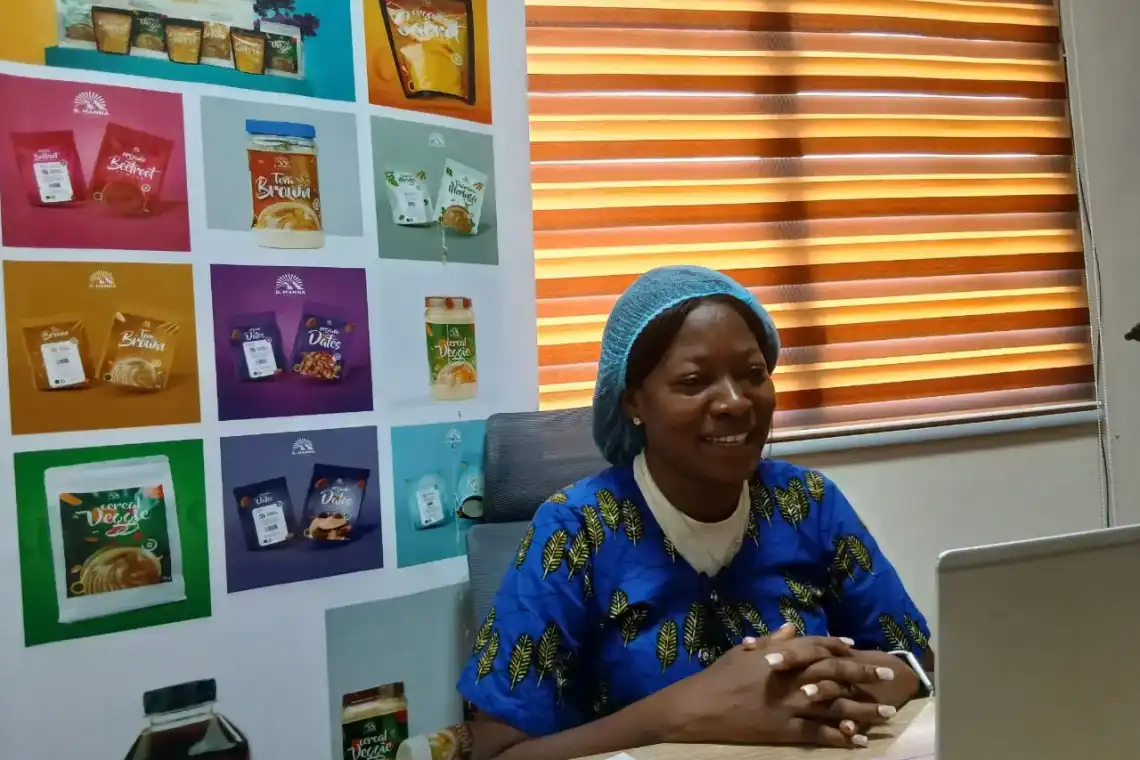
In a compelling testament to the resilience of Ghanaian MSMEs, Mrs. Bernice Foster, Founder of B. Manna Foods Limited, has detailed her journey from processing flour in her kitchen to becoming a certified exporter. Established in 2020 at the height of the COVID-19 pandemic, the company has successfully transitioned into a structured facility in Kasoa, supplying both local retail outlets
and international markets in the United Kingdom.
Mrs. Foster’s story highlights the critical role of the Post-COVID-19 Skills Development and Productivity Enhancement Project (PSDPEP), a government initiative funded by the African Development Bank Group, in bridging the "Scaling Gap" for local manufacturers.
1. The PSDPEP Injection: Scaling with GH₵300,000
The turning point for B. Manna Foods came through a GH₵300,000 grant under the PSDPEP. This funding allowed the company to move beyond its "small room" origins and invest in the industrial infrastructure necessary for international standards.
Strategic Investments Funded by PSDPEP:
-
Infrastructure: Moving from a home kitchen to a dedicated, food-grade processing facility.
-
Machinery: Acquisition of modern processing equipment for cassava, plantain, yam, and cereals.
-
Human Capital: Expanding the team from 3 to 15 staff members, including a dedicated food scientist to ensure quality control.
-
Export Readiness: Partnering with intermediary logistics firms to enter the United Kingdom market.
2. The "Made in Ghana Marketplace": A Pay-it-Forward Model
Having experienced the "struggle for shelf space" herself, Mrs. Foster has launched a social-enterprise arm called the “Made in Ghana Marketplace.” This initiative provides free shelf space to emerging startups, removing one of the most significant barriers to entry for new Ghanaian brands.
“We don’t charge them anything. We want to bridge the gap in market access because I experienced that struggle myself.” — Bernice Foster
3. Advocacy for an "AfCFTA Reset"
While celebrating her success, Mrs. Foster issued a direct call to the institutions managing the African Continental Free Trade Area (AfCFTA). She argued that for small businesses to truly benefit from regional trade, the "paperwork wall" must be dismantled.
Proposed Policy "Resets" for SMEs:
-
Streamlined Certification: Simplifying the documentation required for cross-border trade.
-
Cost of Doing Business: Implementing tax reliefs and reduced utility tariffs for local manufacturers.
-
Regulatory Ease: Simplifying business registration to encourage informal entrepreneurs to formalize.
4. Context: The 2026 "MSME Resilience" Momentum
The success of B. Manna Foods aligns with a broader national push in late March 2026 to empower the private sector:
-
Digital Literacy: MTN’s "SME Accelerate" clinic in Ho training 250+ entrepreneurs in financial reporting.
-
Export Power: GEXIM launching a US$300M portfolio to boost the export-readiness of 100+ MSMEs.
-
Banking: GCB Bank reporting record profits after pivoting to support wholesale and commercial segments.
-
Diplomacy: AU and UN recognition of the slave trade as a "grave crime against humanity," which MPs are using as a rallying point for "Economic Empowerment."
The Bottom Line
The rise of B. Manna Foods represents a "Productivity Reset." By moving from a subsistence "kitchen model" to a science-backed "export model," Bernice Foster has proven that with the right combination of persistence and government-backed financing, Ghanaian MSMEs can compete globally. Her advice to young entrepreneurs remains clear: "Continuously improve your products and remain persistent."